The short version
- Nausea is common on GLP-1 medications and tends to show up when a dose is increased.
- Eat smaller meals slowly, and stop at the first sign of fullness.
- Lighter, lower-fat foods usually sit better than rich, fried or very sweet ones.
- Sip fluids through the day. If nausea or vomiting won't settle, call your doctor.
Jump to a section
Nausea is one of the most common side effects of a GLP-1 medication, and for many people it eases with time. These food habits can make queasy days a little easier, but they don’t replace your care team.
How common is it?
Very common, especially while the dose is being increased.
Trial ranges from the 2025 joint advisory (ACLM, ASN, OMA and TOS):
Fewer than 10% stopped the medication because of stomach side effects. If you’re queasy, your body is often still adjusting.
How should I eat when I feel sick?
Eat smaller portions, slowly, and stop at the first sign of fullness.
A 2022 expert consensus lists a few simple habits:
- Halve your usual portion. You feel full sooner on these medications. You can always have more later.
- Slow down. Put your fork down between bites and chew well.
- Stop when satisfied. The gap between “comfortable” and “too much” can be small. Save the rest for later.
- Eat little and often. Try five or six small meals at consistent times, and avoid long stretches without food.
- Stay upright after eating. Sit up for a while or take a short, gentle walk.
What foods sit well?
Easy-to-digest, lower-fat foods, ideally with some protein.
Try this
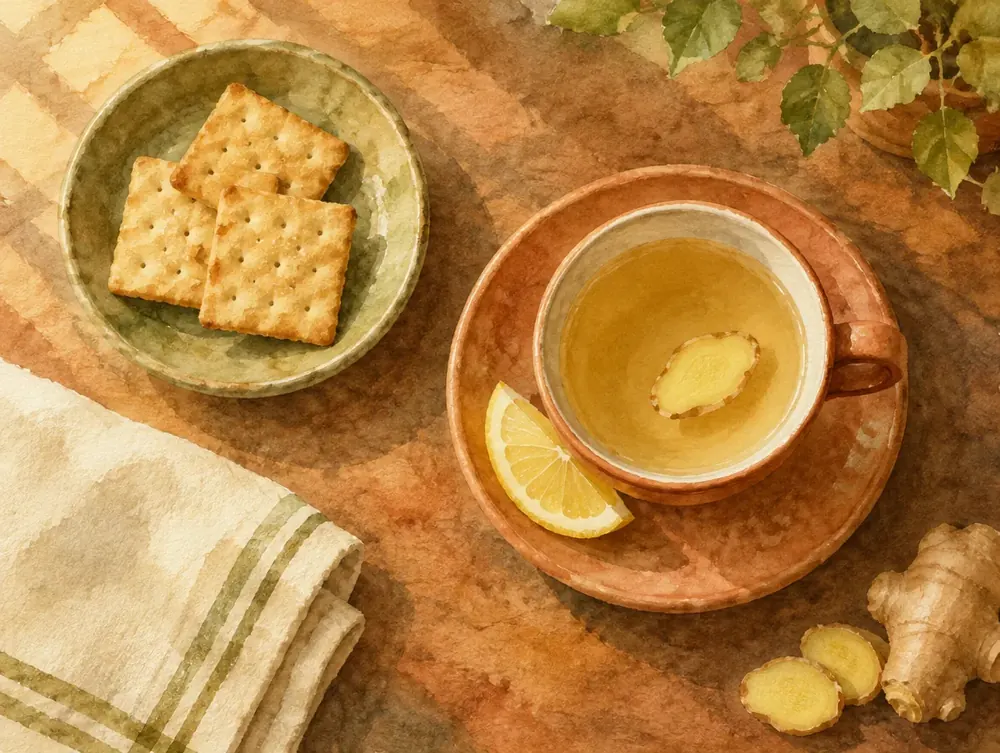
¾ cup Greek yogurt · 17 g protein1 boiled egg · 6 g proteinChicken and rice soupTofu in a light brothGinger or peppermint teaCottage cheese, poached chicken with rice, and simply prepared white fish work too. Crackers, toast, rice or bananas help when you need something plain. The advisory mentions ginger or peppermint tea can help with nausea. Protein helps protect muscle, so try the protein finder.
What should I go easy on?
Fried, greasy, very sweet or spicy foods, and large portions of anything.
Heavy sauces too. The advisory adds that very high-fiber foods can be tougher in the first few days, and alcohol may make nausea worse. None of this is forever. See foods that can feel harder on a GLP-1.
What should I drink?
Clear, fresh drinks in small sips through the day.
Try water with lemon or cucumber, weak tea or clear broth, without drinking so much at once that you feel too full. The consensus lists fizzy drinks among things to avoid with reflux. If bubbles bloat you, choose still drinks for now.
What if my gut is slow or loose?
For constipation, add fluids and fiber gradually; for diarrhea, avoid large or high-fat meals.
Good fiber sources include fruit, vegetables, oats, beans and lentils. The advisory also mentions supplements for each. Ask your doctor or pharmacist before starting any of them.
When should I call my doctor?
When you can’t keep food or fluids down, or symptoms won’t settle.
Your doctor may have other options, including medicines for nausea. Questions about your dose are always for your prescriber.
What does a gentle day look like?
Small amounts of plain food and steady sips, spread across the day.
- Morning: a few crackers, then a small bowl of oats made with milk
- Mid-morning: half a cup of Greek yogurt with banana
- Lunch: a cup of chicken and rice soup
- Afternoon: ginger tea and a boiled egg
- Dinner: a small portion of baked fish with rice and soft carrots
- Through the day: small sips of water
When your appetite settles, Imi plans meals like this for you each week. For the bigger picture, see eating well on a GLP-1.
Sources (2)
- Mozaffarian et al. Nutritional priorities to support GLP-1 therapy for obesity: a joint advisory from ACLM, ASN, OMA and TOS. Obesity Pillars, 2025
- Gorgojo-Martínez et al. Clinical recommendations to manage gastrointestinal adverse events in patients treated with GLP-1 receptor agonists: a multidisciplinary expert consensus. J Clin Med, 2022